

When going through the home building process, you want to know that the materials you choose are appropriate, durable, and aesthetically pleasing. In this guide, we discuss some of the best house-building materials used by commercial building contractors across the UK – from the foundations of the house to the materials used to complete its structural integrity and overall finish.
We’ve included cost comparisons, sustainability guidance, and considerations specific to Exeter’s climate, so you can make informed decisions before your project begins.
When choosing structural materials for a home extension, the three most common options are timber frames, structural insulated panels (SIPs), and traditional brick and blockwork. Each has its strengths depending on your budget, timescale, and the existing construction of your property.
New builds and extensions built with timber frames generally take less time to construct than masonry alternatives, which can reduce overall build costs. The internal wooden frame structure supports the house and is then clad with stone or brick for the outer finish. Timber is classified as a renewable material and, when sourced with FSC certification, carries strong environmental credentials.
Our professional carpenters in Exeter work with timber across a wide range of build types, from new residential builds to bespoke single-storey extensions. Timber frames generate excellent insulation and perform well in Exeter’s damp maritime climate when properly treated and ventilated. The main drawback remains the risk of rot compared with cavity construction, though modern preservative treatments have significantly reduced this concern.
Cost guide: Timber frame construction typically runs £1,200 – £1,800 per m² for a completed structural shell – though prices vary with specification and market conditions.
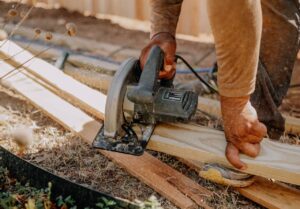
A typical SIP panel consists of two sheets of oriented strand board (OSB) that encase a thick layer of foam insulation – usually expanded polystyrene injected between the sheathings. As the foam sets, it forms a chemical bond with the OSB, creating a lightweight, ultra-strong panel.
Other materials used to form panels include sheet metal, magnesium oxide board, cement, and plywood. Panels can also be insulated with polyurethane, polyisocyanurate, or compressed straw – an increasingly popular eco-friendly option as sustainability moves up the agenda for UK homeowners.
SIPs are well-suited to energy-efficient home extensions, offering excellent airtightness in line with the UK’s Future Homes Standard building regulations.
Commonly used to form walls, beams, and frames, recycled steel is beneficial to the environment as it uses primary energy sparingly and reduces demand on raw material extraction. It is immensely durable, with one of the highest strength-to-weight ratios of any building material, and its fire resilience makes it a popular choice for commercial and mixed-use projects.
The Building Research Establishment (BRE) rates steel as one of the most recyclable structural materials available, with end-of-life recovery rates above 90%.
Steel is extremely versatile, used in everything from structural frames to interior fixtures and lighting. The main drawback is cost – recycled steel remains relatively expensive compared to timber, though its longevity and near-zero maintenance often justify the investment over time.
Whether you’re building from the ground up or undertaking property extensions in Exeter, brickwork and blockwork remain the backbone of UK residential construction. As components of resistant masonry, bricks and blocks offer high mass, solid compressive strength, and proven performance over centuries.
Brick and blockwork withstands ferocious weather and severe temperature variation – particularly relevant for Exeter’s South West exposure, while requiring minimal maintenance once built. Our experienced Exeter builders specify and lay brickwork across all project types, from foundations to feature walls.
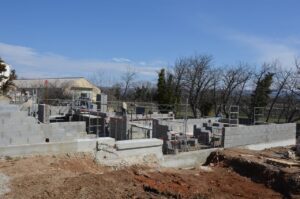
As a building’s first line of defence against the elements, roofing materials need to be chosen carefully – particularly in Exeter’s South West climate where rainfall and wind exposure are above the UK average.
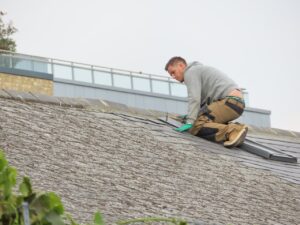
The range of sustainable building materials available today has expanded dramatically. Homeowners and contractors alike are increasingly choosing materials that reduce embodied carbon – particularly as the UK Green Building Council’s net-zero targets become mainstream across the construction industry.
If you’re planning a property refurbishment and want to explore sustainable material options, the Cowley’s Building & Maintenance team is happy to advise on what works best for your specific project and budget.
Cost is one of the most common questions we receive when clients are selecting materials. The table below gives a general guide to indicative costs and relative characteristics – actual costs will vary based on supplier, specification, and project complexity, and are subject to market changes.
>
| Material | Approx. Cost/m² | Durability | Sustainability | Best For |
|---|---|---|---|---|
| Timber frame | £1,200 – £1,800 | 50 – 80 yrs | Good | Extensions, new builds |
| Clay brick | £60 – £120 | 100+ yrs | Moderate | Walls, foundations |
| Concrete blockwork | £40 – £80 | 100+ yrs | Moderate | Foundations, walls |
| Recycled steel | £150 – £300 | 100+ yrs | Excellent | Frames, beams |
| SIP panels | £1,400 – £2,000 | 60 – 100 yrs | Good | Energy-efficient extensions |
| Hempcrete | £80 – £150 | 50 – 70 yrs | Excellent | Insulation, self-build |
| Reclaimed brick/stone | £80 – £180 | 100+ yrs | Excellent | Period refurbs |
| Natural slate (roof) | £80 – £160 | 100+ yrs | Good | Roofing |
| Concrete roof tiles | £30 – £60 | 40 – 60 yrs | Moderate | Most roof types |
| Metal roofing | £100 – £200 | 50 – 70 yrs | Good | Modern/commercial |
Costs shown are indicative and will vary by project, location, and specification. For an accurate quote, contact us for a free consultation.
Planning an extension or renovation in Exeter? Material selection is one of the most important decisions you’ll make for your project. Our experienced team can guide you through the options based on your budget, timeline, and sustainability goals.
Sustainability has moved from a ‘nice to have’ to a central consideration in UK building projects. When selecting materials, it’s worth considering lifecycle impact – how long a material lasts, how much maintenance it requires, and what happens at the end of life. The Energy Saving Trust provides useful guidance on energy-efficient material choices, and the Royal Institution of Chartered Surveyors (RICS) publishes professional standards for sustainable building practice.
All our building projects are delivered in full compliance with current UK Building Regulations, and we stay up to date with the latest changes to ensure your project meets all required standards from the outset.
Different project types call for different material priorities. Here’s a quick guide based on the most common projects we carry out in Exeter:

Below, we’ve answered some of the most common questions homeowners in Exeter ask when choosing building materials.
Are eco-friendly building materials more expensive?
Not always. Some sustainable materials like hempcrete and reclaimed brick can be cost-competitive with conventional alternatives, and their longer lifespans often deliver better value over time. Where eco-friendly options do carry a higher upfront cost, reduced energy bills and lower maintenance requirements frequently offset the difference.
Which building materials last the longest?
Natural slate, clay brick, natural stone, and recycled steel all have proven lifespans of 100 years or more when correctly specified and installed. Timber, properly treated and maintained, can also last many decades. The key factor is always correct installation – even the best materials fail prematurely if poorly fitted.
What building materials are best for home extensions in Exeter?
For extensions in Exeter, matching the existing property’s materials is usually the best approach for planning consent and visual continuity. Brick, stone, and timber frames all work well in the local climate. SIPs panels are an increasingly popular choice for energy-efficient single-storey extensions. Our Exeter extension specialists can advise based on your specific property and planning context.
How do I choose building materials for Exeter’s climate?
Exeter’s maritime South West climate means higher than average rainfall, moderate humidity, and exposure to southwesterly winds. This makes moisture resistance and durability key considerations. Natural slate, clay tiles, treated timber, and quality brickwork all perform well. Breathable materials are particularly important in older properties to avoid trapping moisture.
What’s the carbon footprint of different building materials?
Embodied carbon varies significantly. Steel and concrete have relatively high embodied carbon at manufacture, though both are highly durable and recyclable. Timber, hemp, and straw-based materials have much lower, often negative, lifecycle carbon footprints. The Energy Saving Trust provides practical guidance on reducing the carbon impact of building projects.
Cowley’s Exeter building services offer comprehensive home building and renovation services, from laying the foundations to completing full property refurbishments. As CHAS-accredited contractors, our team of highly trained professionals deliver quality results on traditional and new builds, extensions, conversions, and commercial projects across Exeter and the wider South West.
Whether you’re selecting materials for a kitchen refit, a two-storey extension, or a complete renovation, getting the specification right from the start saves time, money, and headaches down the line. We’re here to help you make informed decisions at every stage.
Call 07843 598 189 or email mail@cowleysexeter.co.uk for a free, no-obligation quote.